Nicole Switzer
Rockaway Real Estate Agent


Living in Rockaway Beach, Queens NY 11693 | Local Real Estate & Neighborhood Guide
Explore the homes, condos, beaches, restaurants, surf culture, transportation and coastal lifestyle of Rockaway Beach, Queens.
Rockaway Beach is one of New York City’s most distinctive waterfront neighborhoods—a year-round residential community built between Jamaica Bay and the Atlantic Ocean on the Rockaway Peninsula in Queens.
The neighborhood combines one- and two-family homes, multifamily properties, condos and apartment buildings with the Rockaway Boardwalk, surfing, restaurants, neighborhood businesses and some of the peninsula’s most active beachfront areas.
I’m Nicole Switzer, a local Rockaway real estate agent who lives and works on the peninsula. This guide explains Rockaway Beach from a local real estate perspective—from the differences between Beach 80th, Beach 90th and Beach 100th Streets to flood considerations, housing, transportation and what properties are actually selling for.
Where is Rockaway Beach? • What streets are considered Rockaway Beach? • What homes are available? • Is Rockaway Beach in a flood zone? • Can you live here year-round? • What is it like to own a home near the ocean?

Where Is Rockaway Beach, Queens?
Rockaway Beach is located on the central Rockaway Peninsula in Queens, New York City. The Atlantic Ocean forms its southern boundary while Jamaica Bay lies to the north.
Neighborhood boundaries on the peninsula are locally understood rather than universally defined. For this guide, Rockaway Beach generally refers to the central portion of the peninsula from approximately the Beach 70s west through Beach 108th Street, transitioning toward Arverne to the east and Rockaway Park to the west.
The neighborhood primarily uses ZIP code 11693, although 11693 should not be treated as an exact Rockaway Beach boundary because the ZIP code also includes Broad Channel.
ROCKAWAY BEACH AT A GLANCE
Borough: Queens
Peninsula: Rockaway Peninsula
Primary ZIP: 11693
East: Transitions toward Arverne
West: Transitions toward Rockaway Park
North: Jamaica Bay
South: Atlantic Ocean
Major Road: Rockaway Beach Boulevard
Ocean Corridor: Shore Front Parkway
Subway: A train / Rockaway Park branch stations
Nearby Ferry: Beach 108th Street
LOCAL REAL ESTATE TIP
Don’t value a Rockaway Beach property using every sale in 11693. The ZIP code includes Broad Channel, and even within Rockaway Beach, a condo on Shore Front Parkway, a two-family home on Beach 90th Street and a detached house farther inland can represent very different markets.
This is important because current 11693 sold results indeed mix Rockaway Beach and Broad Channel transactions.
Understanding Rockaway Beach Block by Block
BEACH 70s–LOW 80s
The eastern end of Rockaway Beach transitions toward Arverne. Buyers encounter condos, apartment buildings, one- and two-family homes and easy access to the beach and boardwalk. The housing mix can change quickly between Rockaway Beach Boulevard, Shore Front Parkway and the interior residential streets.
BEACH 80s
The Beach 80s include traditional residential blocks, multifamily homes, condos and apartment buildings. Moving toward Beach 86th, Beach 87th and Beach 88th brings you deeper into the central Rockaway Beach residential community.
BEACH 90s
The Beach 90s are one of the neighborhood’s most active areas. Here residential properties mix with restaurants, surfing, beach activity and newer condominium development. Beach 90th Street also provides subway access.
BEACH 100s–108th
Moving west, the neighborhood begins transitioning toward Rockaway Park. Beach 108th is especially important because it connects the ocean side with Beach Channel Drive and the NYC Ferry landing on the Jamaica Bay side.
Bay Side or Ocean Side? Understanding Rockaway Beach
LOCAL PERSPECTIVE
“Ocean side or bay side?” is one of the first geographic distinctions I make when discussing a Rockaway Beach property because the lifestyle, housing, views and flood considerations can be different.
ATLANTIC OCEAN SIDE
The ocean side is what many people picture when they hear “Rockaway Beach.” Shore Front Parkway, the boardwalk, beach entrances, surfing and oceanfront residential buildings define much of this side of the neighborhood.
Buyers may prioritize ocean views, balconies, boardwalk access and proximity to the beach—but should also consider wind, salt exposure, insurance and building maintenance.
JAMAICA BAY SIDE
Travel north through the neighborhood and the environment changes. Beach Channel Drive follows the Jamaica Bay side of the peninsula, where residents experience calmer water, boating activity, wetlands and sunsets rather than Atlantic surf.
WHAT’S BETWEEN THEM?
Residential Rockaway Beach. The peninsula is narrow enough that many residents live only a relatively short distance from both Jamaica Bay and the Atlantic Ocean.
Rockaway Beach & the Atlantic Ocean
The Atlantic Ocean isn’t simply near Rockaway Beach—it defines the neighborhood. The beach and reconstructed Rockaway Boardwalk provide residents with swimming, surfing, walking, running, cycling and year-round recreation.
Rockaway is also unique within New York City because designated portions of the beach allow surfing, making surf culture part of the neighborhood’s identity rather than simply a seasonal attraction.
For homeowners, however, coastal living also means understanding salt air, wind, moisture, storm preparation and exterior maintenance.
LIVING HERE VS. VISITING HERE
Summer visitors experience Rockaway Beach for a day. Residents experience it in February, during storms, on quiet weekday mornings and after the crowds leave. Buying here means understanding both sides of coastal living.


The Other Side of Rockaway Beach: Jamaica Bay
The Atlantic gets most of the attention, but Jamaica Bay defines the northern side of the Rockaway Peninsula.
Beach Channel Drive runs along much of this side of the neighborhood and connects Rockaway Beach with the rest of the peninsula. The bay provides a very different landscape from the ocean—calmer water, wetlands, boating and dramatic sunsets.
The geography is part of what makes living in Rockaway Beach so unusual. You are not simply living “near the beach.” You are living on a narrow coastal peninsula positioned between two major bodies of water.

OCEAN SUNRISE. BAY SUNSET. THAT’S ROCKAWAY LIVING.
Parks, Playgrounds & Outdoor Space in Rockaway Beach
ARE THERE FARMS IN ROCKAWAY BEACH?
Rockaway Beach does not have a major urban farm comparable to Edgemere Farm. Community gardening and neighborhood planting exist around the peninsula, but agriculture is not a defining feature of Rockaway Beach. Do not invent or label a garden as a major attraction unless we have verified it.
Rockaway Beach & Boardwalk
The beach and boardwalk function as the neighborhood’s largest outdoor recreational space and connect communities across the peninsula.
Beachfront Playgrounds & Recreation
NYC Parks maintains recreational facilities along the Rockaway Beach and Boardwalk system, including playgrounds, basketball, handball, fitness areas, sports facilities and other outdoor amenities at different points along the beachfront.
Skate & Active Recreation
The central Rockaway beachfront includes recreational spaces that serve skateboarders, cyclists, runners and other active users.
Neighborhood Green Space
Unlike Edgemere, Rockaway Beach is not defined by large undeveloped nature preserves or extensive vacant land. Green space here is more closely tied to the beach, boardwalk, parks, playgrounds and residential yards.
Why Is Rockaway Beach Known for Surfing?
Rockaway Beach has developed one of New York City’s most recognizable surf communities. Designated surfing areas, surf schools, board rentals and businesses serving surfers have helped make the neighborhood a year-round destination for people who want ocean recreation without leaving New York City.
Surf culture has also influenced local restaurants, cafés, retail and the overall identity of the neighborhood.
For homeowners, that popularity can create a very different environment near active beach entrances during summer compared with quieter residential blocks farther from the ocean.
LOCAL BUYER TIP
Visit the block you’re considering both during a summer weekend and during a normal weekday if possible. Rockaway Beach can feel very different depending on the season and exact location.

There is no single “Rockaway Beach house.” Housing changes considerably depending on the street, property type, distance from the water, legal use and age of construction.
What Types of Homes Are in Rockaway Beach?

One-Family Homes
Detached and semi-detached houses are found throughout the neighborhood.

Two-Family Homes
Rockaway Beach has numerous two-family properties that can appeal to owner-occupants and buyers interested in rental-income potential.

Three- & Multifamily Properties
Multifamily homes and apartment properties are an important part of the neighborhood’s housing stock.
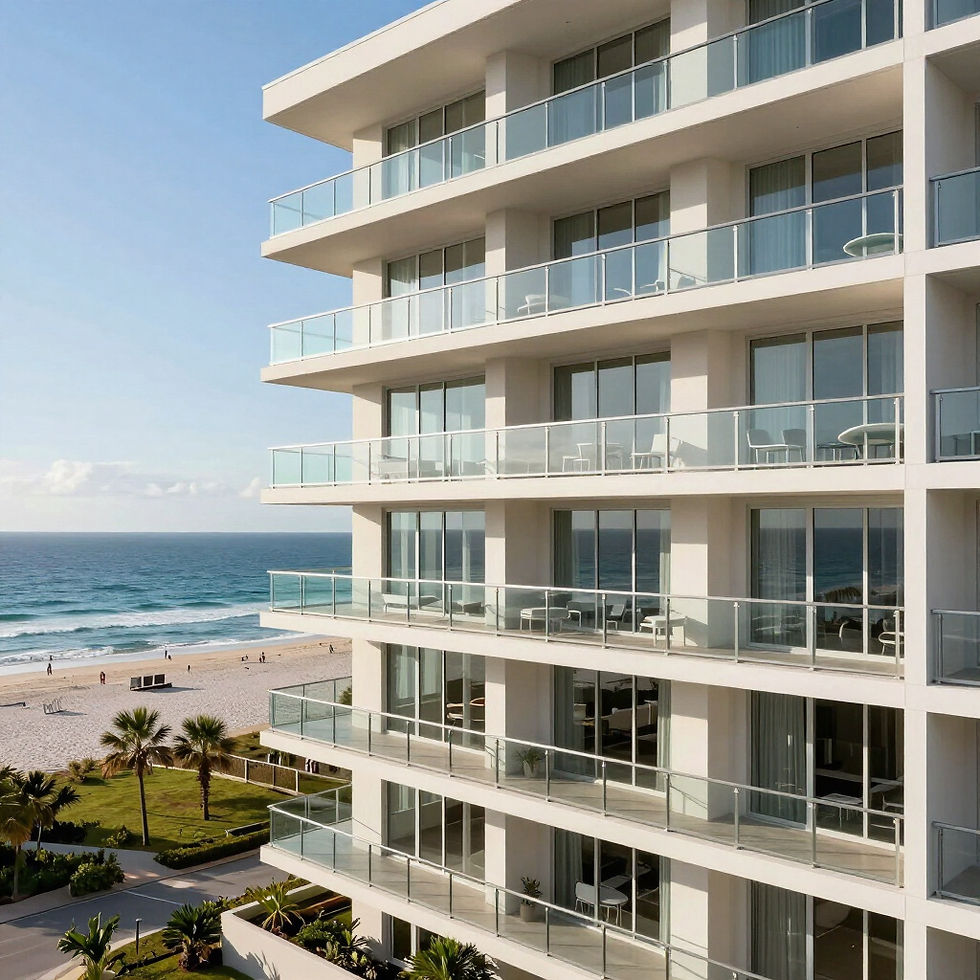
Condominiums
Condo development has become an increasingly visible part of Rockaway Beach, particularly near the ocean.

Co-ops
Cooperative apartments provide another path to homeownership, including more affordable entry points than many houses.

Newer Construction
New construction and post-Sandy redevelopment have introduced newer homes and residential buildings alongside older Rockaway housing.
Buying a Condo or Co-op in Rockaway Beach
Rockaway Beach offers apartment ownership opportunities ranging from smaller cooperative apartments to newer oceanfront and ocean-adjacent condominiums.
Recent condo development has introduced larger units, balconies, terraces, parking and amenity-oriented buildings into portions of the neighborhood.
CONDO BUYERS SHOULD REVIEW:
Common charges • property taxes • building insurance • flood considerations • reserves • assessments • parking • rental rules • pet rules • building amenities.
CO-OP BUYERS SHOULD REVIEW:
Maintenance • board requirements • financial requirements • underlying mortgage • reserves • assessments • subletting policies • flip taxes when applicable.
CONDO ≠ CO-OP
The ownership, financing, approval process and resale considerations are different.
Flooding, Elevation & Coastal Resiliency in Rockaway Beach
Rockaway Beach is a coastal community on a barrier peninsula, so flood exposure and resiliency are important parts of homeownership. However, flood risk is property-specific and should never be assumed solely from a neighborhood name or ZIP code.
BUYING NEAR THE WATER?
Ask for flood and insurance information early in your home search—not after you’ve already fallen in love with the house.
WERE HOMES ELEVATED AFTER SANDY?
Some Rockaway Beach homes were elevated, rebuilt or substantially improved following Superstorm Sandy. Buyers should verify permits, elevation documentation and construction history for the individual property.
WHAT HAS CHANGED ALONG THE OCEAN?
The reconstructed Rockaway Boardwalk and subsequent coastal-protection projects have substantially changed the beachfront following Sandy. Shoreline resiliency work is intended to reduce storm and erosion risk, but it does not eliminate individual property flood exposure.
WHAT ABOUT DRAINAGE?
Drainage and sewer infrastructure have been upgraded in different portions of the Rockaways, but conditions vary block by block. Buyers should examine the specific property, surrounding street elevation and available flood information.
Restaurants, Cafés & Local Businesses in Rockaway Beach
Rockaway Beach has developed one of the peninsula’s strongest concentrations of independent restaurants, cafés, bars, surf-related businesses and seasonal food destinations.
The commercial experience isn’t concentrated on one street in the same way Beach 116th anchors Rockaway Park. Instead, restaurants and businesses are scattered throughout Rockaway Beach Boulevard, the Beach 80s and 90s and around popular beach entrances.
Summer brings substantially more activity, but Rockaway Beach is also a year-round residential community supported by businesses that serve local residents throughout the year.
LOCAL PERSPECTIVE
The businesses are part of Rockaway Beach’s identity. Use Nicole’s original photographs of the places she actually visits rather than generic restaurant stock photos.

LOCAL CAFÉ
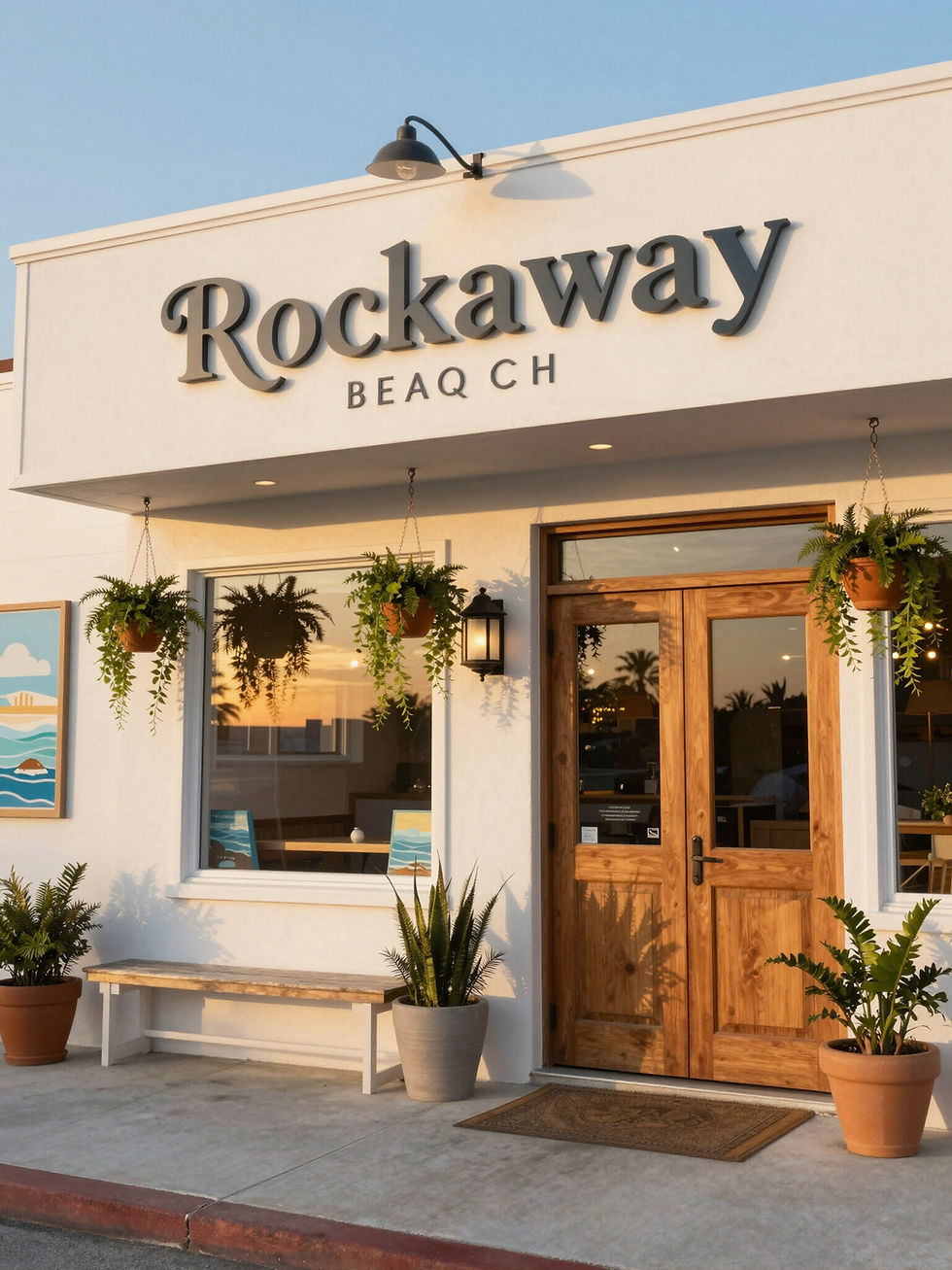
ROCKAWAY RESTAURANT

SURF SHOP

ROCKAWAY BOULEVARD
Schools Serving Rockaway Beach & 11693
Rockaway Beach is part of NYC Geographic School District 27. Families have access to public, charter, religious and other educational options throughout the Rockaway Peninsula.
School zones and program eligibility can change, so buyers should verify the zoned school for a specific home directly through NYC Public Schools using the actual property address.
BUYER TIP
Never rely solely on the school listed on Zillow, an MLS listing or another real estate website when choosing a home. Verify the actual address with NYC Public Schools.
I would not pad this section with a random list of schools just to make it longer. On the live page, we should include only nearby schools we can accurately identify and keep their grades/program information updated.
Community Life in Rockaway Beach
Rockaway Beach is more than a summer destination. It is a year-round community shaped by longtime residents, newer homeowners, renters, surfers, small-business owners and families.
Neighborhood organizations, civic groups, volunteer efforts and local businesses have played important roles in rebuilding and strengthening the community following Superstorm Sandy.
The neighborhood’s identity is unusually connected to its environment. Beach cleanups, coastal awareness, storm preparation and protecting public waterfront spaces are part of local life in ways that may be less visible in inland Queens neighborhoods.

What’s Changing in Rockaway Beach?
Rockaway Beach has changed considerably over the past decade. New condominium construction, infill housing, commercial investment and post-Sandy infrastructure improvements have added newer housing and amenities alongside the neighborhood’s traditional homes.
Unlike Arverne East, Rockaway Beach is not defined by one single massive master-planned redevelopment. Development tends to occur through individual residential projects, condominium buildings, mixed-use development and infrastructure investment.
OCEANFRONT DEVELOPMENT
Newer condominium buildings have changed portions of Shore Front Parkway and nearby blocks, introducing larger modern apartments, balconies, terraces and amenity-oriented residential options.
INFRASTRUCTURE & RESILIENCY
Public investment in the beach, boardwalk and coastal-protection system has been one of the most significant changes to Rockaway Beach since Sandy.
COMMERCIAL INVESTMENT
The growth of restaurants, cafés, surf businesses and other independent businesses has helped turn parts of Rockaway Beach into a destination while supporting a growing year-round population.
For buyers and sellers, it’s important to understand both what exists on a block today and what may be developed nearby in the future.
Boating, Jamaica Bay & Marinas Near Rockaway Beach
Although Rockaway Beach is best known for the Atlantic Ocean, Jamaica Bay is only a short distance away on the north side of the peninsula. Boating, kayaking and fishing opportunities are available throughout Jamaica Bay, with marina facilities located elsewhere around the Rockaways. Rockaway Beach itself should not be marketed as a marina-centered neighborhood. Buyers who specifically need a boat slip, storage or direct water access should investigate those facilities separately.
BOAT OWNER?
Tell Nicole at the beginning of your search. Being close to Jamaica Bay and having practical boat access are not the same thing.
How Much Are Homes Selling for in Rockaway Beach in 2026?
Rockaway Beach does not have one useful “average home price” because the neighborhood includes co-ops, condos, one-family houses, two-family homes and larger multifamily properties.
WHAT IS MY ROCKAWAY BEACH HOME WORTH?
Ask Nicole for a property-specific comparative market analysis.
Those are current 2026 transactions, and they demonstrate the enormous difference between Rockaway Beach property categories.
Recent 2026 transactions illustrate that range. A one-bedroom at 79-14 Rockaway Beach Boulevard sold for $290,000, while two-bedroom units in the same building have sold in the upper $300,000s.
Newer and larger condos sell in a very different range. Two-bedroom units at 151 Beach 96th Street have recently sold around $660,000 to approximately $735,000, while a two-bedroom at 91-16 Shore Front Parkway sold for approximately $910,000.
Houses also vary considerably. A five-bedroom at 148 Beach 93rd Street sold for $920,000 in August 2026, a five-bedroom at 182 Beach 97th Street sold for $980,000, and a six-bedroom property at 144 Beach 93rd Street sold for approximately $1.55 million.
These examples demonstrate why a Rockaway Beach property should be compared with similar properties—not every sale in ZIP code 11693.
Can First-Time Buyers Purchase in Rockaway Beach?
Yes. Rockaway Beach offers several different entry points into homeownership because the neighborhood includes co-ops, condos, one-family houses and multifamily properties.
Depending on the buyer and property, financing may include conventional, FHA or VA financing as well as qualifying first-time-homebuyer and down-payment-assistance programs.
A two-family buyer may potentially be able to use qualifying rental income depending on the mortgage program and lender requirements.
Coastal insurance should be investigated early because required homeowners and flood-insurance costs can affect the total monthly housing expense and qualification.
Talk with Nicole about first-time buying options in Rockaway Beach.
What Should I Know Before Buying in Rockaway Beach?
Buying in Rockaway Beach means evaluating both the property and the coastal environment surrounding it.
✓ Exact block and location
✓ Ocean side vs. bay side
✓ House vs. condo vs. co-op
✓ Legal property use
✓ Certificate of Occupancy when applicable
✓ Current flood information
✓ Elevation information
✓ Flood-insurance requirements
✓ Homeowners/building insurance
✓ Property taxes
✓ Condo common charges
✓ Co-op maintenance
✓ Building reserves and assessments
✓ Parking
✓ Outdoor space
✓ Rental/subletting rules
✓ Roof and siding
✓ Windows and exterior materials
✓ Salt-air exposure
✓ Drainage
✓ Storm-related improvements
✓ Distance to subway
✓ Distance to ferry
✓ Distance to beach
✓ Summer activity on the block
Thinking About Selling Your Rockaway Beach Home?
Pricing a Rockaway Beach property requires more than pulling every sale in 11693. That ZIP code includes different communities and very different property types.
I compare your home with properties buyers would actually consider as alternatives. That means looking at property type, legal use, condition, size, parking, outdoor space, rental potential, ocean proximity, building amenities, flood considerations and the exact surrounding blocks.
For condos and co-ops, the building itself matters enormously. For multifamily properties, legal use and income potential matter. For houses, lot size, parking, condition and proximity to the beach can materially affect buyer demand.
My Local Perspective on Rockaway Beach

— Nicole Switzer
Licensed Real Estate Salesperson
Rockaway Properties
Rockaway Beach is one of the neighborhoods where I think people need to separate the idea of visiting Rockaway from actually living here.
Yes, we have the beach, boardwalk, surfing, restaurants and summer activity. But this is also a year-round neighborhood where people commute to work, raise families, own two-family houses, sit on condo boards, shovel snow and prepare their homes when a coastal storm is coming.
The real estate changes quickly too. A co-op near Beach 80th Street, a two-family home in the Beach 90s and a newer oceanfront condo can all be called Rockaway Beach real estate, but they shouldn’t be evaluated the same way.
I live and work on the Rockaway Peninsula, so when I evaluate a Rockaway Beach property I’m looking beyond the ZIP code. I’m looking at the block, property type, legal use, distance from the water, transportation, surrounding development and what buyers are actually comparing it with.

Frequently Asked Questions About Rockaway Beach, Queens NY 11693
Have a Question About Buying or Selling in Rockaway Beach?
Rockaway Beach real estate changes block by block. Get a property-specific answer from someone who lives and works on the peninsula.